

Juice Abuse (Updated)
We don’t come into the world harming ourselves. We’re taught how.

NOTE: I posted the following essay several months ago, but decided to pull it from Welcome to LarryLand last spring.
Why? You’ll find out shortly.
For now, let’s just say that it’s time to post “Juice Abuse” again, with an update that addresses, among other things, the power of storytelling. I implore you to take a minute and first read (or reread) the original essay for context. Mahalo.

One bright spring morning some 55 years ago, my father and 10-year-old me sat together in the family dining room, finishing our breakfast cereal. Dad, a tall, strapping man sporting a high-and-tight crew cut, wore a crisply ironed white shirt and narrow black tie, the de facto uniform of all corporate types during the early ’70s.
I finished my Froot Loops and, running late for school, gulped down about half of my fresh-squeezed orange juice before grabbing my dishes, dumping what remained of the juice into the kitchen sink and heading for the front door.
“Wait a minute,” I heard my dad say as I opened the door.
“What?”
My father headed over to the sink. “Get over here.”
“Dad, I’m late for – .”
“Get. Over. Here. Now.”
I ambled over to him.
Reaching into the sink, he snatched the garbage disposal strainer that held what remained of the orange juice I’d just discarded, and poured it into a glass.
“Drink it,” he commanded.
“But dad, I – ”
Reaching down and grabbing onto my chin with a meaty paw, my 6’4”, 230-pound father jerked my head up and bent over so I was nearly eye to eye with him.
“Kid, I’m not asking you. I’m telling you. Drink it.”
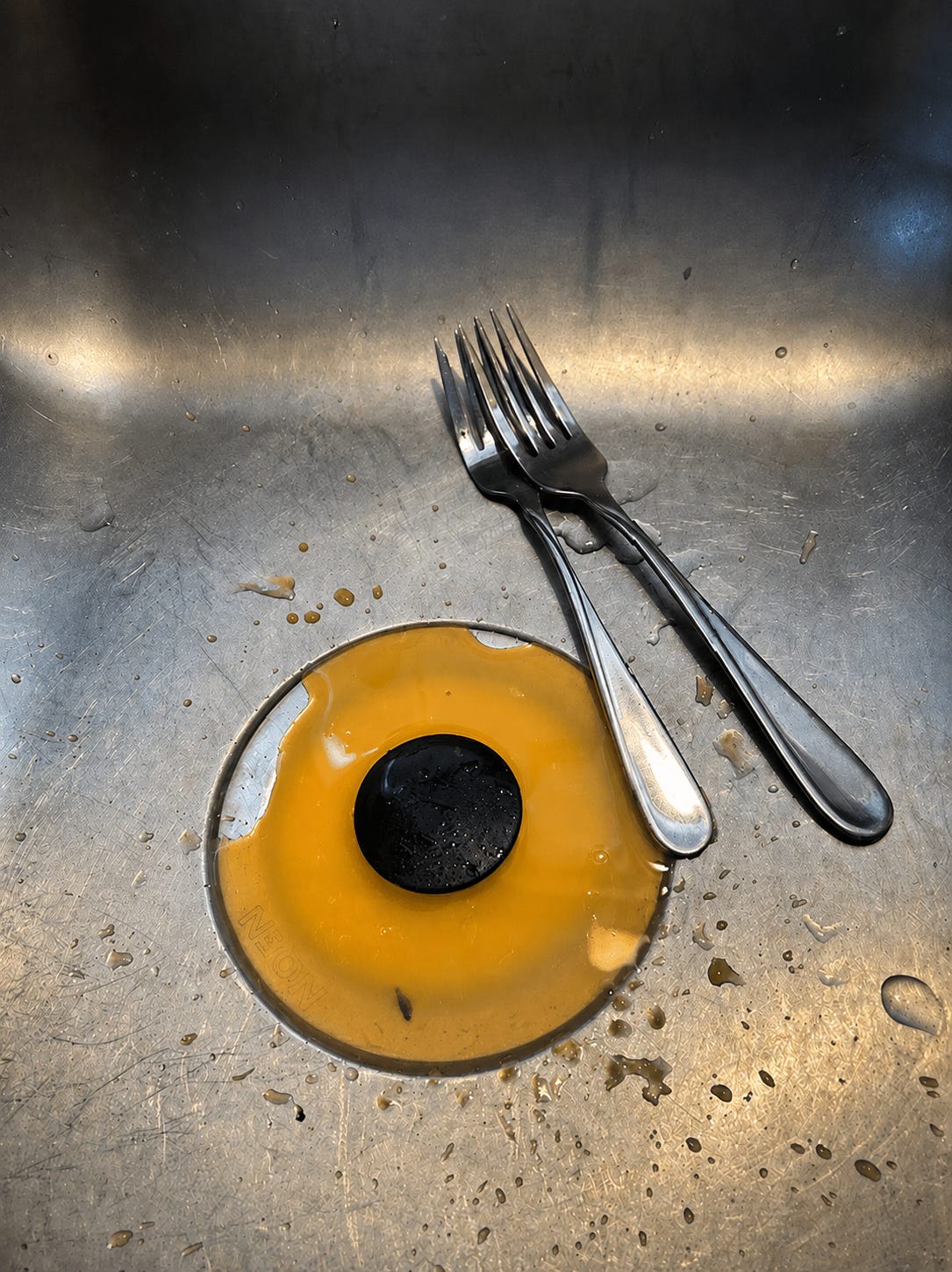
At this point, I had two options: Swallow the slop, like a good, compliant boy, or paint Dad in my favorite shade of orange.
To this day, so many decades later, I regret not spraying OJ all over him. I’m sorry I didn’t lash out and – for once honoring a sensitive, frail spirit that had been damaged long before this morning – accept the consequences.
Instead, without a word, I swallowed the orange juice.
Just like I’d always swallowed my anger. Just like I’d always swallowed all of my feelings.
The half century that followed this fateful morning can be encapsulated in a nutshell: I’ve swallowed, buried, denied, and glossed over my feelings ever since.
Friends have told me that I really didn’t have any other option back then, that drinking the sink slop was the only way that little boy would be safe, perhaps even survive.
They could be right. Who knows?
People who survive childhood trauma, those souls targeted by their perpetrator’s long-buried anger and shame, often “internalize the abuser,” in a way becoming the abuser. In doing so, they ultimately treat themselves with far greater brutality than their abuser ever had.
One day I’d like to forgive my father. I’d like to weep at his gravesite and tell him that I understand where he came from, how his behavior had all been about projecting his own deeply buried feelings, feelings from a past he’d never shared.
And when that happens, maybe I can start to forgive myself.

UPDATE: Today, I’m happy to report that this story has taken a turn for the better, that the story itself has changed.
After decades of self-harm rooted in identifying with the abuser – unconsciously turning the abuser’s cruelty inward and continually treating myself the way he only occasionally treated me – I’m experiencing the “retrospective magic” of storytelling. For example, as I’ve reflected on my past through writing, my father has cropped up in a number of essays, memories that manifested long after the original publication of “Juice Abuse.” Here are a few examples (with links following this essay):
In “A Tender Moment,” I reflected on the time my father took a risk when I was a little boy and showed an affectionate, vulnerable side I’d never before seen in my young life, and how I reciprocated this tenderness four decades later, just a few days before he passed.
“The Prank That Never Happened” is the story of how, just one day after Dad died, I was tempted to furnish some silly fibs to the funeral officiant about the man and his life, fibs that would’ve been included in his eulogy. In choosing to tell Dad’s truth, however, I was able to look deeper into the whole person – a good person – beyond my former myopic viewpoint.
And “Howie in High Gloss” recounts the “edible prank” my parents played on my brother and me, and how we reciprocated by painting a gaudy mural in their home, one depicting a media blowhard viewed unfavorably by my folks. Dad’s sense of humor came to the fore in this one.
Before I wrote these stories, I saw my father as little more than a bully. But thanks to the magic of storytelling, I’ve been able to see him in a far more objective, accepting manner. Is this storytelling magic – this seeming ability to rewrite the past through recollection – rooted in psychology? Neurology? Even spirituality?
For now, I only have one answer: Yes…
These essays didn’t come about by mere chance. Rather – and at the risk of going all New Agey and “woo-woo” – it’s as if my Higher Self has invited me to use an innate, long-dormant gift to see my father from a more expansive, holistic perspective. By seeing and actually re-experiencing my life with the “whole man,” I’m sensing a new, wondrous (yet oddly terrifying) feeling: forgiveness.
This process, I’m happy to add, includes forgiving myself. Is that cool or what?
This all begs another question: What, beyond storytelling, is behind this expanded perspective, this awakening?
New York Times best-selling author (and extraordinarily sharp cookie) Daniel Pink believes that when we recall an event, our memory becomes pliable, that new context or emotional meaning can be added to the original. This “metacognition,” our ability to think about our own thinking, actually makes our memories editable. As such, we can leverage this to change a given memory, to literally change our past. Pink adds that our noggins are already hard-wired for it; all we have to do is use it.
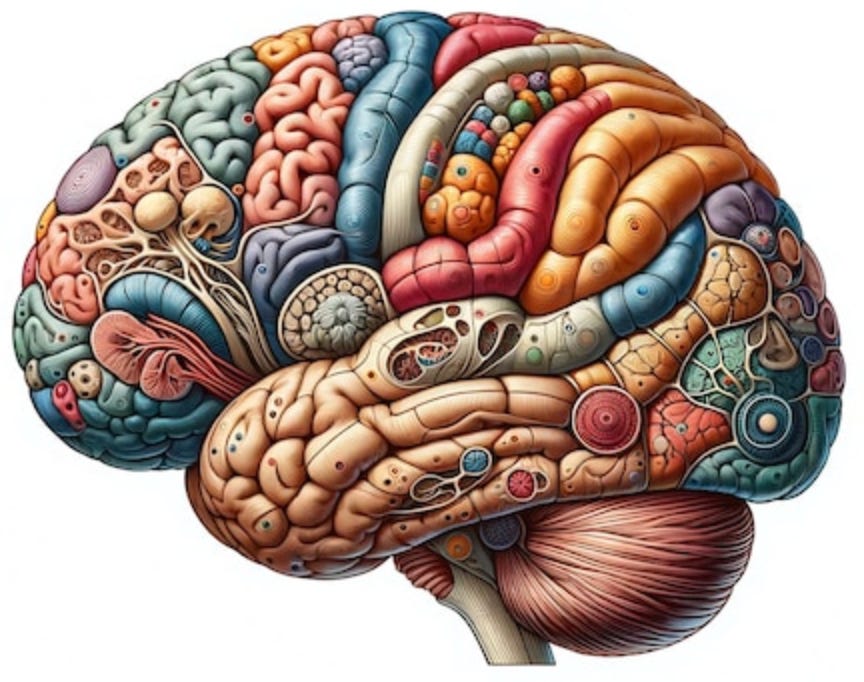
Apparently, through storytelling – and a HUGE amount of support from like-minded writers – I’ve been using it.
Still, I’d love to understand the deeper elements behind this shift toward forgiveness, toward acceptance. What have I learned, about my Dad and his past or about my own life, that’s led to this recent evolution?
I have no idea.
All I can do, at least for now, is be grateful for what’s been happening, and to know that I’ll likely address this whole confusing ball of wax in a future essay.
In the meantime, I’m content to squeeze a bit more out of life.

A TENDER MOMENT
My father never told me how he really felt. It took me decades to realize that he never had to.
THE PRANK THAT NEVER HAPPENED
The truth about my father emerged only after a side journey through LarryLand.
HOWIE IN HIGH-GLOSS
A tale of one loudmouth, two pranks, and a lifetime of belly laughs.
If you scroll up just a tad, you’ll see a reference to the HUGE amount of support I’ve received in my storytelling journey. That support comes from Write Hearted, a wonderful online writing community. (The flip side of the same coin: I wouldn’t be doing any of this without this fine gathering of wordsmiths.)
I thank the following Write Hearted members for their feedback and support as this essay was being rejiggered: Rick Lewis, Kathy Ayers, James Bailey, Rachel Parker, Dana Allen and Linda Kaun.

Larry... this is a great piece. I love the reconciliation with yourself that has been going on with the work that is happening at Write Hearted. We are all changing together through the art (and now science) of storytelling. I've been going through a lot of the same healings with my own book project and allowing the old stories to surface too. It's interesting how that happens. That Daniel Pink quote inspired me to write a piece about the specific memory effect that helps us heal too. And also your mention of the book "Necessary Losses" had me go and look into it, where I realized that I have been saying the same idea about loss and old trauma-type situations as the focus on that book. And again, it inspired a beautiful piece about loss and learning through the process of it. Keep on keeping on my friend. Your voice is one that I love to read when a LarryLand story comes through.
Aloha Larry... This is such a beautifully sneaky essay, Larry. It starts as a story about orange juice and somehow ends up being about memory, identity, inherited pain, neuroplasticity, forgiveness, and the strange miracle of becoming old enough to finally see your parents in full color instead of silhouette. Really wonderful piece.